


Teófilo Victoria Lecture Series – The City Beautiful Movement – Lecture III
The Institute of Classical Architecture & Art, Florida Chapter (ICAA FL) proudly presents, in collaboration with the Coral Gables Museum, our inaugural
TEOFILO VICTORIA LECTURE SERIES
The City Beautiful Movement – Lecture III
The City Beautiful Movement and Washington, D.C. by Justin Shubow
1 credit towards the Certificate in Classical Architecture (Elective) | 1 AIA CES Learning Units | HSW
Lecture 3 – Thursday, April 24, 2025, 5:30-7:30pm
Cocktail Reception
5:30 – 6:15 pm
Lecture
6:15-7:15pm, with Q&A to follow
&

The 1901-1902 McMillan Plan for Washington, D.C. was the first achievement, and arguably the apogee, of the City Beautiful movement. Furthering and reinterpreting the original L’Enfant Plan for the capital, the McMillan Plan replaced the Victorian landscaping of the National Mall with the east-west axis and Monumental Core as we know them: stately classical buildings and memorials and public grounds. The Plan, the creation of the Senate Park Commission chaired by Senator James McMillan, paved the way for and envisioned the Lincoln Memorial, Union Station, the Federal Triangle, and generous public parks. The Plan continues to underpin planning in the District of Columbia to so some degree, though some have called for a McMillan 2.0 to broaden the vision for the next century. What might a neo-City Beautiful plan look like?
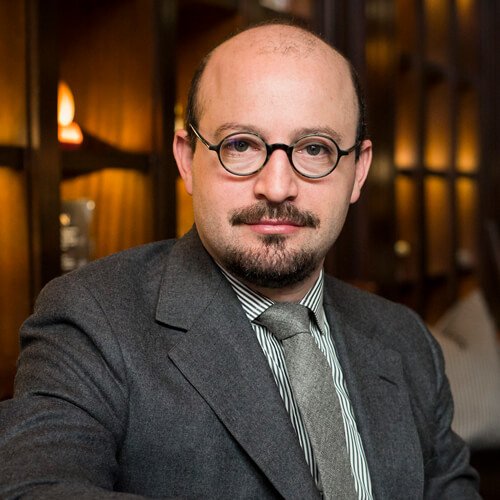 Justin Shubow is President of the National Civic Art Society, a nonprofit organization headquartered in Washington, D.C. that promotes the classical and humanistic tradition in public art and architecture. He is former Chairman of the U.S. Commission of Fine Arts, an independent federal agency that is the aesthetic review board for Washington, D.C., to which he was appointed by the President. Shubow has testified in Congress on topics such as the future of the National Mall and the design of the Dwight D. Eisenhower Memorial. He is the author of The Gehry Towers over Eisenhower: The National Civic Art Society Report on the Eisenhower Memorial, a critical examination of the memorial’s competition, design, and agency approval. He has published architectural criticism in numerous outlets, and has delivered talks about architecture around the country and in Europe. Shubow received a B.A. from Columbia University, a J.D. from Yale Law School, and completed four years of study in the University of Michigan’s Ph.D. program in philosophy. He is a member of the Board of Advisors of the Roger Scruton Legacy Foundation and the Board of Academic Advisors of the Alexander Hamilton Institute for the Study of Western Civilization.
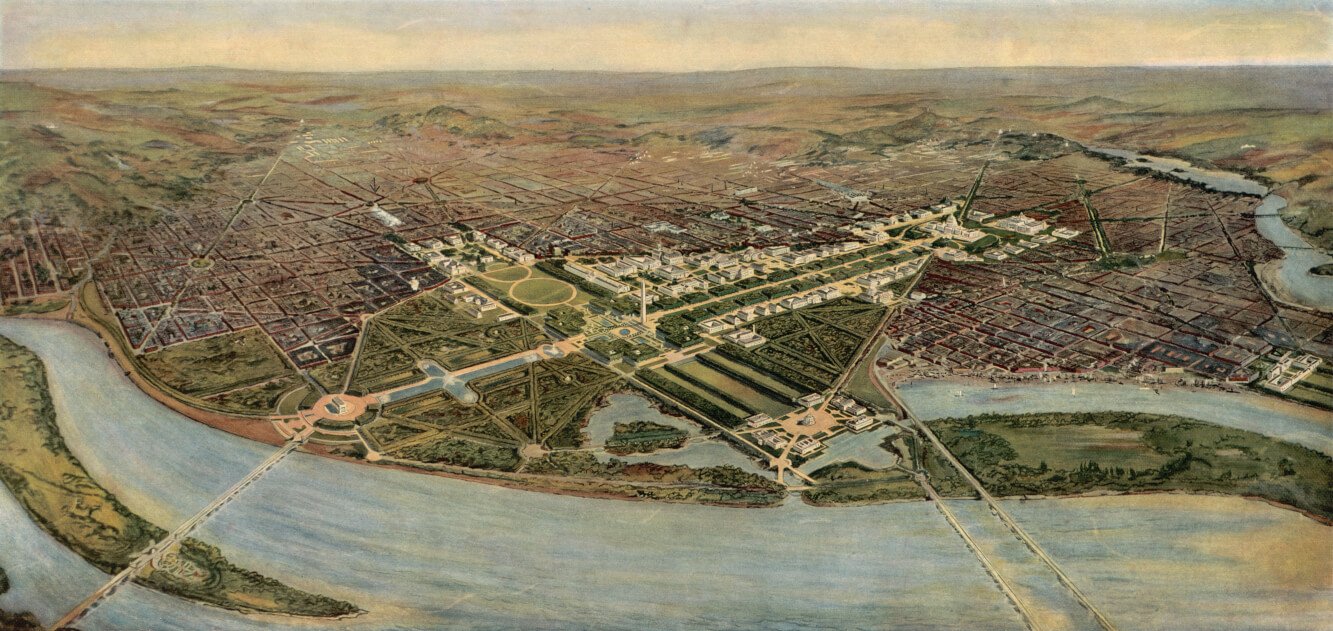
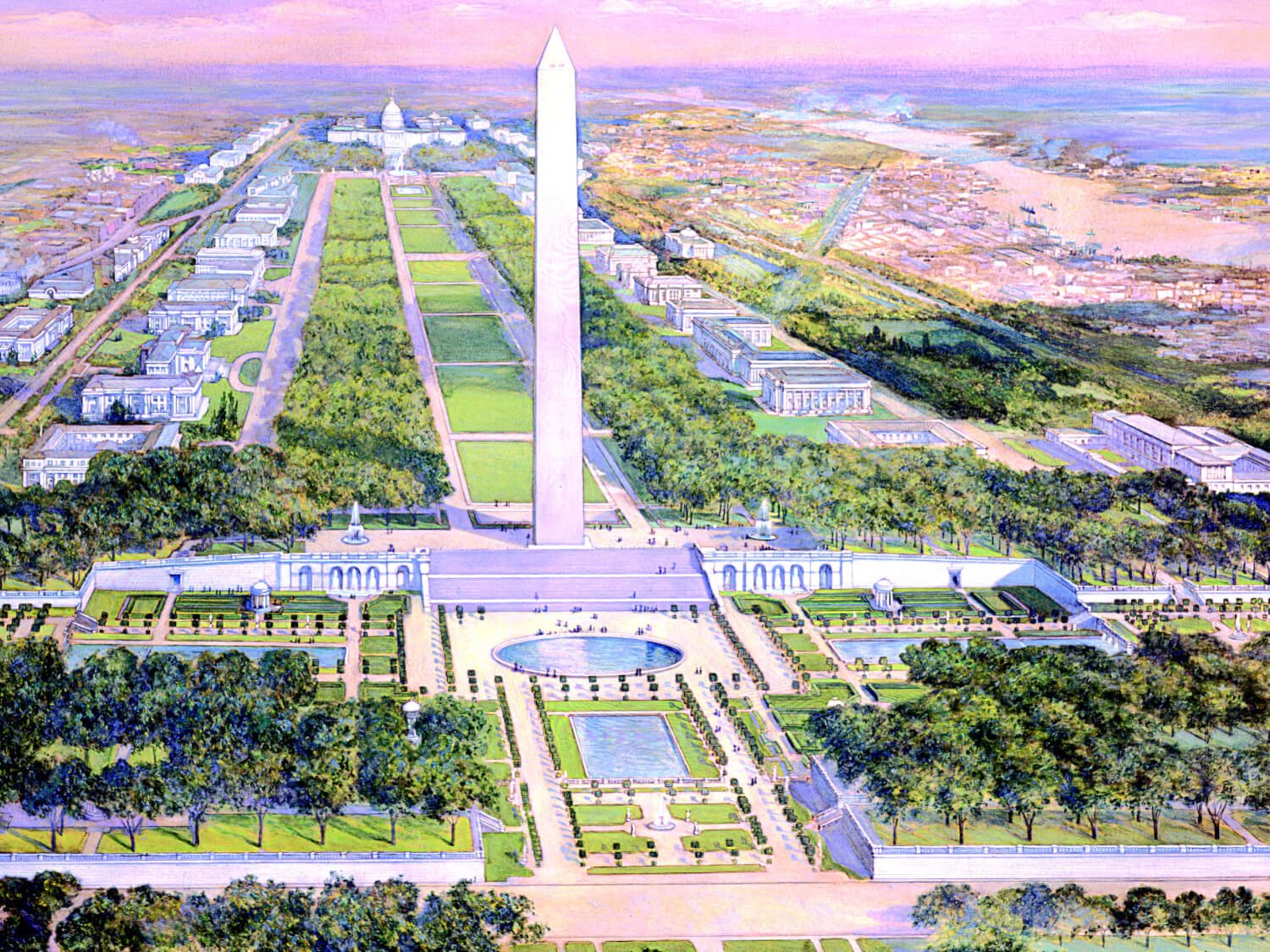

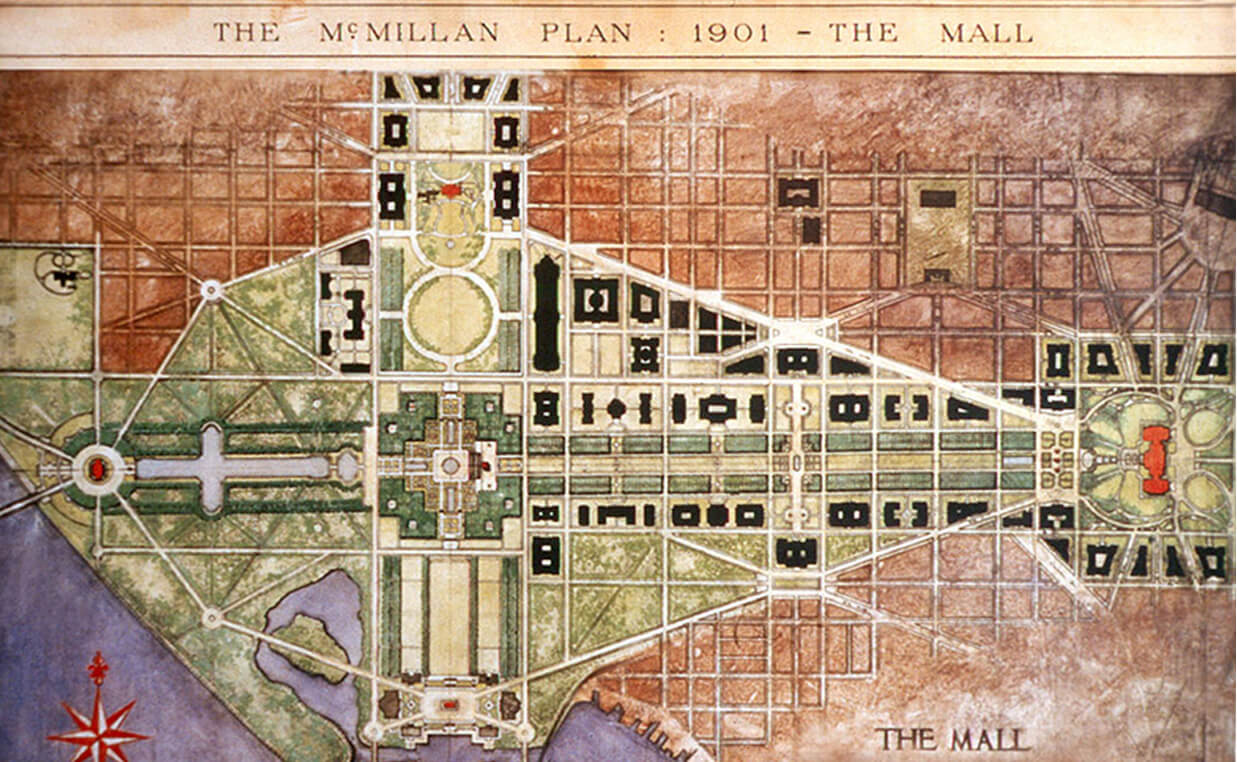
The lecture will consider how the City Beautiful movement developed Washington, D.C. from a health-and-wellness perspective. At the turn of the nineteenth century, the National Mall was bookended by a soot-spewing train station at one end and a malarial swamp at the other. The McMillan Plan for the city sought to improve the public welfare by eliminating the railway station and swamp, and more broadly through constructing beautiful public buildings and monuments, along with ample tree-lined greenspace, pools and fountains, and recreational facilities. These design features all contribute to improvement of our health, walkability, and enjoyment living in the City Beautiful. The talk will consider how these and other kinds of beautification improved—and can still improve—public health, safety, and wellness in the District of Columbia.
At the end of the course, participants will be able to:
- Understand the Plan for Washington, D.C. Prior to the Twentieth Century
- Participants will learn how the L’Enfant Plan laid down the iconic plan for Washington, D.C., including how that plan was furthered or ignored prior to the 1901-1902 McMillan Plan.
- Understand the Principles of the City Beautiful Movement and Its Influence on Washington, D.C.
- Attendees will gain insight into the urban planning and architectural principles of the City Beautiful Movement, with a specific focus on its impact on Washington, D.C.
- Understand the Abandonment of the City Beautiful After World War II
- Participants will come to see how “urban renewal” and other modernist developments in the District of Columbia diverged from the McMillan Plan.
- Understand How the McMillan Plan Could Be Expanded for the Next Century
- Attendees will learn how the City Beautiful principles underlying the plan for Washington could be deployed in an expanded plan for the metropolis.
BECOME AN EVENT SPONSOR!
Event – Supporting Sponsor $5,000
Event – Contributing Sponsor $2,500
Event – Friend of the Chapter $1,500
Go to EVENT SPONSORSHIPS page & choose sponsorship “$ option” to process online payment.
Complete the Event Sponsorship Form & return to director@flclassicist.org.
Sponsorships are tax-deductible. Sponsorships include listing on promotional materials for this event and 1 ticket.
Thank you for your support of this event and our ICAA FL Chapter!
With Special Thanks To Our Event Sponsors
Lead Dinner Sponsor


Friends of the Chapter
With appreciation and gratitude to our Annual Sponsors
Patron’s Circle Sponsors
Alonso & Associates, Inc.
Flower Construction
Shoreline Building Group
Woolems, Inc.
Lead Lecture Series Sponsor – Architecture & Design
Casa Branca Atelier & Showroom
Henry Flagler Donors
Amanda Lindroth Design
Belt
Fairfax & Sammons
Gil Walsh Interiors
Marker Construction Group
Marmotech
Mh Fine Hardware
Reis Contracting
Window & Door Design Center of Florida
Related Events
With Appreciation and Gratitude to our
Benefactor
Flower Construction - 2026
Marmotech - 2026
Woolems, Inc. - 2025
Patron Circle
Fairfax & Sammons | Flower Construction | Woolems, Inc.
& Henry Flagler
Amanda Lindroth Design | American Steel Windows & Doors | Belt | C.F. Knight | Cove Construction Group | Gil Walsh Interiors | LEEDS Custom Design | Marker Construction Group | Marmotech | MH Fine Hardware | Piedras International | Reilly Architectural | Reis Contracting | Shoreline Building Group